statcounter

Thursday, February 01, 2007

Squeamish Editors Seldom Make History


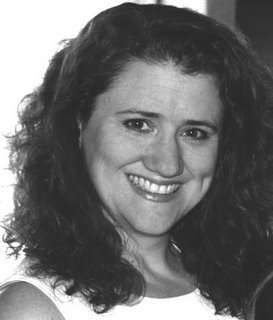
Literary Director, University of Arizona Poetry Center

Kore Press Author of Intercession, a broadside in the Kore Press Women's Voices Against War series, and of the Forward to While Light is Built by Tedi Lopez-Mills.


It seems ridiculous to be shocked, but I was last fall when I read the Kore Press manifesto, "Why We Publish Women." I did believe that the literary community was further along in the repair of gender disparity. Maybe this is because so much of the truly dynamic work that does make it through the squeeze of the printing press is written by women. Maybe it's because so many of our male colleagues are quick to say so themselves, or because our current generation's cornerstone critics are women. All this and still the disparity while we wait for our nation's most prominent editors to catch up. All I can presume, as we sit here waiting, is that they've taken to heart Sappho's fragment 84 advice, "If you are squeamish, do not prod the beach rubble."

Actually, I say that for effect, but the truth is, we're not sitting outside the editor's door waiting for our name to be called. We sit, stand, and run like mad-women getting our work done. When necessary (and no, it's not always necessary, but way too often it is) we pick up the slack of our husbands, fathers, male colleagues, and bosses, and we pick up the pace to get it all done. We do it despite the contract with people we love that we not say those things that are difficult, as Deborah Fries writes in her blog entry. Elline Lipkin writes that Philomela, when her tongue has been cut out, "lost none of her nerve," and Sandra Lim reminds us, quoting Wallace Stevens, of our responsibility to “read poetry with one's nerves."

The women of Kore Press, the women who edit literary journals and run literary organizations across the country, are leading us all into the uncharted territory of a messy canon. A canon in which there is no "the great American epic," no representation of "the American experience." A complicatedness that will make of our scholars not theorists but well-honed file-clerks trying to make sense of it all.

As curator of the Reading Series for the University of Arizona Poetry Center, I aim to present an aesthetically and culturally diverse line-up of writers whose works represent the best of what's being written. It shouldn't come as a surprise then (but I must admit it did) that this spring our Series entirely comprises women. They span the spectrum from narrative to performative polyvocal word-sound artists. They're journalists, teachers, translators, editors, activists, ex-pats, mothers, hedonists, intellectuals, and writers of children's literature. They're all over the map and an audience that loves one of them will probably not stand for another of them. Each of them, though, is a beach rubble prodder through and through.

May we all undig our heels from wherever they’re dug and sink our toes in the sand.

Monday, January 01, 2007

On Race and Violence


Blogger: Shannon Cain
Executive Director, Kore Press


Book Review

Color of Violence: the INCITE Anthology
South End Press, 2006

This article will appear in the next issue of the Sonora Review.

How does a white woman respond to a book about violence written and edited by women of color? The day I contacted South End Press to let them know I’d like to review their 2006 book Color of Violence: The INCITE! Anthology, I wasn’t thinking about what it would mean for me, a reader whose race privilege puts her outside its contributors’ experiences, to offer my perspective, much less to challenge or to agree with its contents.

Who am I, was my realization somewhere around page two, to enter into this dialogue? On more than one occasion when I engaged the topic of race—when I elected to acknowledge that racial dynamics were at play in a given personal or professional situation—I ended up in a morass of anxiety and misunderstanding. Why am I surprised when the dish I cook ends up disastrous, given the primary ingredients I bring to the recipe are blundering good intentions, nervousness around the topic, and privileged ignorance?

So I feel a morose kinship with those early pioneers of the domestic violence movement, the white women whose groundbreaking work in the late seventies and early eighties sparked a massive social consciousness-raising around the issue of relationship violence and created fundamental shifts in the way law enforcement, health care and social services recognize and deal with battering. Kinship because a generation ago it was perhaps their own privileged ignorance that allowed the social justice ethic of that movement—which we are reminded in the introduction of Color of Violence had been largely authored by women of color, particularly Black lesbians—to all but disappear from the antiviolence organizations of today. We are now stuck with a “movement” that long ago lost its radical social change edge. It has transmogrified into a network of government-funded social service charities, emergency room procedures that medicalize the issue into one-size-fits all policies, and laws that often land the victim/survivor of abuse in the criminal justice system alongside her abuser.

The thematic thread that runs through Color of Violence is not so much that women of color are subject to violence in particularly cruel and complicated ways, or that we as a society have failed to see that the intersection of gender, race and violence is rigged with explosive devices. Certainly these are the elements upon which the book is based; the reason for its birth. The thread that shows up in every essay, the one its contributors tug at relentlessly, is this: the state—in the form of law enforcement, medicine, criminal justice, “national security,” and even nonprofit social services—is complicit in the continuation of violence against women of color.

It’s a daring premise, and one that the Color of Violence contributors defend in terms both academic and personal. Through intellectual discourse and gut-level anecdote, we are introduced to an imposing number of complexities. Complexity #1, for example: the nonprofit industrial complex and its rape crisis centers and shelters that seek to eradicate violence by working in cooperation with a criminal justice system that has been brutally oppressive toward people of color. Complexity #2: the expectation by communities of color that women “keep silent about sexual and domestic violence as a way to maintain a united front against racism.” Complexity #3: If you’re a Black woman in Chicago versus a Palestinian immigrant in Canada versus a maquila worker in Ciudad Juarez, violence can play out with both staggering differences and universal similarities.

While I admire the diversity of experience and viewpoints in Color of Violence, the volume’s refusal to set a rhetorical tone was difficult to take. A transcript of a woman’s wrenching oral storytelling is set side-by-side with what appears to be an excerpt from another contributor’s PhD thesis. The end result is that editorial cohesion is sacrificed; the volume has the feel of having been assembled by committee.

In an anthology of such diversity and sheer number of essays (thirty), there are bound to be a clunker or two. I was disappointed by Sylvanna Falcón’s “‘National Security’ and the Violation of Women: Militarized Border Rape at the US-Mexico Border.” While Falcón makes an incontrovertible case for the culture of racism and misogyny and the lack of accountability that allows Border Patrol and other law enforcement agents to rape women attempting to cross the border, she fails to convince me of her premise that “rape is routinely and systematically used by the state in militarization efforts.” I began her essay eager to believe, eager to see the evidence of actual state sponsorship of rape, but ultimately was left wondering how unsubstantiated claims such as Falcón’s serve the movement. I'm uncomfortably aware that the insistence on providing “proof” of what disenfranchised people know is true has been historically used as a way of invalidating their experiences, so it feels like treachery on some level to suggest the need for evidence of Falcón’s claims. Still, it would have been enough—heartbreaking and rage-inducing enough—simply to document the culture of bigotry, the premeditated nature of assaults by serial rapists wearing the Border Patrol uniform, and the malevolent results of official passive neglect.

By and large, the essays in this volume show that anecdotal evidence is plenty good enough. Most effective are those pieces that ignore expectations that women of color “prove” (to the patriarchy, no less) what they already know to be true. Dana Erekat’s “Four Generations of Resistance” is a gorgeously crafted piece of creative nonfiction framed in the second person: a “testimonial” told as “true stories intertwined into one” in which the reader is invited into the experience of an intergenerational quartet of Palestinian women, framed as a tag-team account of everyday horrors that bring into sharp focus the unrelenting struggle against violence that is their lives.

The question is whether we can hear these stories. How can a country that seems to have overlooked the obvious reality that recent schoolhouse sex abuse and murders in Amish county and in Colorado were hate crimes against girls manage to understand the layers of meaning behind the rape and beating of a Mexican migrant by a Border Patrol agent? I am beholden to the contributors of this volume for their attempts to shift a poisonous culture that debases us all. It is possible—and indeed this anthology makes one believe it is probable—that women of color will lead us through and beyond our collective ignorance.

Saturday, December 02, 2006

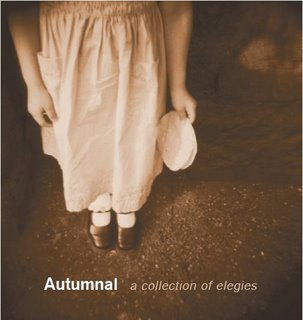
Autumnal


Blogger: Lisa Bowden
Co-founder and Artistic Director, Kore Press


Autumnal is a collection of contemporary elegies by 15 poets and a violinist I compiled this fall during what the Chinese call the season of grief. When faced with great loss, many artists search for remnants of memory and try to make meaning by stitching something new out of what is gone. It is Persephone's, or a Shaman’s, desire: the deep, dark silence and the urge to make something out of it. Transubstantiate remembering into an organized, aesthetic fact and you shape the no-thing back into a thing again. What the living do, if we are to follow Marie Howe’s edict, is to make music and poetry and begin to touch, and be touched by, the emotional landscape of grief. This is territory beyond language, and here reconstructed with language—an attempt to speak the unspeakable.

Why audio? Sound, Olga Broumas says, is the “ear of heart.” Hearing is the last sense that goes in the dying process, while making sound is the way we come into the world—with a cry. The first hard truth I realized shortly after my mother died was that I would never hear her voice again. I thought of a message she had left on my voicemail. When I found it was no longer there, I called her answering machine and listened to her outgoing message. I strained my ear to hear every drop of her in that old cassette recording. It was the same few words over and over and me wringing each phrase dry with listening every time I dialed.

I began collecting these aural works at that time. It started out as a search for my mother in the voices of others and then became an effort to leave behind traces for others’ loved ones, from “ear to heart.” The pieces came from 18 different sources collected in a few short weeks. Everyone had poems, the experience of some loss on the tip of the tongue. A hand-held digital Olympus recorder went to Mexico City and back to gather Tedi Lopez Mills’ deep and throaty voice. The same recorder collected poems on a back porch after work, at the dining room table, in the Kore Press office and backyard, Niki's floor on her lunch hour. Some sound was digitized from The Poetry Center recordings in the 90s; many came over e-mail as MP3 files from poets speaking right into their own computers on the East and West coasts. The violin music of Vicki Brown, from her CD Winter Garden, is a piece I played for my mother in the hospital during her last days. It is called "Take Flight," and while it was written to celebrate the artist’s return to the world of music from science, it became my mother’s swan song, her own final flight away. The music has such a sad, beautiful, sound.

Autumnal presents a chorus of mourning songs, an homage to those lost, especially this fall—mothers, fathers, grandfathers, grandmothers, aunts, friends, brothers, lovers, and soldiers.

Autumnal was funded in part by a grant from the Arizona Commission on the Arts.

Friday, December 01, 2006

A Day Without Art


In commemoration of World AIDS Day, our regularly scheduled blog entry will appear tomorrow, December 2nd.

Wednesday, November 01, 2006

A Room of One's Own


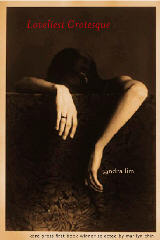
Blogger: Sandra Lim
First Book Award Winner
for Loveliest Grotesque


I recently returned from a weeklong poetry residency at Soul Mountain Retreat in East Haddam, CT. Graciously hosted by poet Marilyn Nelson and her assistant Tonya Hegamin, it is a true writer’s haven where one can think, read, write, and be part of a supportive writing community. If you looked at the experience from the outside, it wouldn’t have seemed that so much was going on: most days I would get up and perhaps go for a walk, come back, putter around the kitchen to make a pot of coffee and breakfast, and then go to my room to face (with equal parts joy and terror) the blank page.

But mostly there was joy. Often, I feel that being a poet, or committing oneself to making open and artful the scent and nature of your mind, is a strange, often unbearable, and mostly solitary activity. Having to be responsible to one’s own imagination: how frightening and yet full of possibility! At Soul Mountain, it was both the room of one’s own and the quiet hum of other writers going about their work that reminded me of the great sense of fulfillment just wrapped up in the making of artwork, the simple trying and doing that can gather up one’s being in a way that few other things can.

I spent one afternoon somewhat idly imagining Amy, Tonya, Pam, and Marilyn going about their projects in their rooms. What were they doing? Maybe someone was looking over their creamy new notebook, with its thick and chewy pages; someone was sniffing out her way to a form; someone was describing light passing over the trees outside; someone was reading up on the mystics; someone was inevitably going to make more coffee. I suppose I imagined that we were, in a sense, preparing ourselves, in our own idiosyncratic ways, to be used by our poems, when they decided to come. But whatever lonely galaxies we were roaming around in, we had to practice, we had to be ready.

There aren’t that many things these days that slow us down, that invite us to move ourselves through an activity of real thinking and feeling, to confront emptiness, to pay attention to the phenomenal moment. Sometimes it’s just a start of recognition that a poem gives me, and that is decent enough. And it need not be relentlessly heavy. It didn’t escape me that I was in Wallace Stevens country at Soul Mountain. Though unexpectedly, it was thinking of him, the great poet of magisterial, meditative inwardness, that got me from surface to depths back to the charms (and humor!) of the surface again. As I gazed outside my window one morning, which looked out onto Peanut Pond and the endless trees burning their gorgeous colors, I thought of how Stevens can so lightly go straight to the heart of the matter: “Poetry is a pheasant disappearing in the brush.” And: “One reads poetry with one’s nerves.”

Sunday, October 01, 2006

A Story of Silence then Speaking


Blogger: Elline Lipkin
First Book Award Winner
for The Errant Thread


yes! radiant lyre speak to me
become a voice

— Sappho, fragment 118

messenger of spring
nightingale with a voice of longing
— Sappho, fragment 136

A friend once observed to me that every woman poet has a Persephone poem or a Penelope one. At the time I laughed because I had, in fact, been working on a Penelope poem myself. The statement seemed strikingly true, although my own response at the time was to say that I had just written a Philomela poem, a lesser-known character in the Greek and Roman pantheon, but one whose silenced voice, paradoxically, spoke the loudest to me.

Philomela’s tale is a grisly one: rape, mutilation, infanticide, attempted murder. Whenever I’ve borrowed her name as on-line pseudonym I invariably receive correspondence back asking why I would choose such a negative moniker. Although I see her story as one of great violence against women, my instinctive reaction has always been to understand her tale as one also of affirmation -- that women will continue to make art despite the violation they endure, and in fact, this kind of transgression can serve as a powerful spur towards writing.
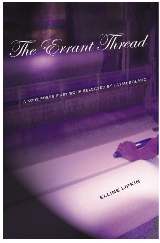
When I first learned about the myth of Philomela during a graduate class, I was transfixed. Its story of silence then speaking, the literal tongue cut from a mouth then serving as an excision from language as symbolic tongue was startling. I was glad to read about how the voice of Philomela was later restored into song, the vocation of the poet, as her presence as the nightingale reappears throughout literature, a ghostly note that invokes her story, although she remains forever outside a window or a door.

Philomela’s defiance within the story has always particularly striking. She specifically tells Tereus she will speak and not be shamed by what he’s done to her. Recognition of her determination is what leads Tereus to the retaliatory act of cutting out her tongue, thereby admitting the power of her (potential) speech. Philomela’s last literal word, “father,” perhaps a plea, perhaps a symbolic severing from patriarchal language, falls from her tongue as it bounces on the ground, writhing like a severed snake. Her violated status banishes her from an acceptable role for a young woman, and in parallel, she is moved literally to the exile of a small hut in the woods. From here her exemption from conventional expectation gives rise to her artistry. Although she loses her literal voice, she finds a way to insist upon her story. Her innovation is born of necessity as she turns to the loom, a traditional tool of both utility and art.

Philomela’s tale has continued to move me on many levels. I am always struck by her resourcefulness and sheer determination, followed by her sister’s complicit understanding, then absolute loyalty, and then extreme sacrifice. The goddess’s intervention adds a happier ending to the tale, but the nightingale’s voice, part song, part plaint, as it reappears throughout the canon of literature, is an ambivalent note, evoking both beauty and melancholy. After I began to research the history of this myth, I came to view many of its essential elements as a kind of controlling metaphor for my own poetic awakening — a need to broaden, although not break, my understanding of the poetic canon as situated within a patriarchal framework linked with an active turn towards a legacy of writing by women, accompanied by vigorous thinking about issues surrounding gendered writing and speaking. While I view my education as a poet as equally informed by both male and female poets and critics, I came to realize early on that many of my concerns as a poet and a critic are deeply connected to what it means to be a woman writer. I want to examine carefully the implications of gender; to think about the ways women poets both constitute their own legacy and also compose the larger canon; what it means for me to write from experiences gendered as female; what points of contact I feel with a tradition which is still burgeoning.

Philomela’s name is often invoked, either directly or by the presence of the nightingale, throughout Western literature. Versions of her story abound from poets as far ranging as Ovid, Chaucer, Sophocles, Shakespeare, Matthew Arnold, Edgar Lee Masters, Sir Philip Sidney, and T.S. Eliot. After first hearing of her weaving, I quickly wrote my own version, “Philomela’s Tongue,” a poem that, as rarely occurs, came out in virtually one sitting. In this poem I focus on Philomela’s determination as reflected in the line, “But she lost none of her nerve.” Despite her mutilation, Philomela is empowered; she transmutes her terrible loss into a gain. In an allusion to the many women poets who write about Penelope, I mention their alliance with the line “Purposed as Penelope, the weft / wept her story, the warp reinforced grief.” At the poem’s end I view her writing, hence her weaving, conflated with her voice, transforming her unheard scream into a text. In a later companion poem, “Tereus Speaks” I realized I wanted to try and consider what his motivations could have been, where his voice might be in the equation as well.

I see Philomela’s tale as one of ultimate triumph, and if a troubling initiation, one that spurs her artistic creation. Separated permanently from codified expectation (virgin, chaste sister) she lives outside a space of patriarchal utility and thereby comes into her own power. I view Philomela as inhabiting an alternate space which frees her and allows both sisters access to what would otherwise be transgressive: pure anger, unabashed desire for revenge, and the steel will with which to act on their intentions.

Finding a language and a tradition which to inhabit is central to my quest in discovering my own voice as a poet. Exploration of what it means to claim words and to claim a context arises within The Errant Thread in various guises. I am interested in what it means to write as as a contemporary woman and I am interested in language itself, exploring the inventive things it can do when words lift from literal into metaphoric meaning. I see this as a place of endless possibility which I approach with recurring faith.

Friday, September 01, 2006

Alison Deming Continues the Conversation


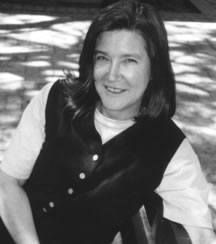
Blogger: Alison Hawthorne Deming

Kore Press author
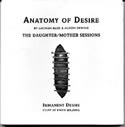
Anatomy of Desire
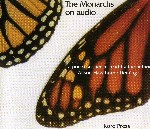
The Monarchs on Audio
Broadsides Girls in the Jungle and Rehearsal Space for War


PERSEPHONE SPEAKS

by Alison Hawthorne Deming
(--after Patricia Barber’s “Mythologies”)


My father was the Big Guy
Generator
Energy Spill
My mother was Cereal
Corn
Matter Sink

Get real I used to tell them
Ditching their dream
That I would be
Forever daughter
Picking flowers in the meadow
While they made action movies
Out of everyone else’s life

What they wanted for me
Was never
What I wanted
So abduction is not quite the word
For what my lover did to me
For me is more like it

Oh beautiful sin in falling
Under the rhythm of his need
And finding I could answer
Stroke for stroke
Be bad and claim my loving
And find the pleasure good

How could I know
The hunger would persist
Would worsen
Once I had left
My mother’s threshing floor
My father’s distant light

Pulled into the underworld
I forgot what lay above
The soil drying seedless
The dying Earth
Unable to revive
Din of lamentation
Not even the gods could abide

My husband too is a god
He struts his ass like a jaguar
His sex is an epic poem
He loves the dead
Because they tell no lies
And yield themselves
Completely to the future

When he fed me the pomegranate
That would keep me
Coming to his dark bed
I did say thank you
My goodness married
To the limbo night inside

Tuesday, August 01, 2006

What She Saw Down There


Guest Blogger: Deborah Fries
Kore Press First Book Award Winner for Various Modes of Departure


Let’s assume that when Persephone returned--older and wiser than before she was abducted by Hades--she emerged from the underworld profoundly changed by what she’d seen, things her family might never experience or understand: soft, wide veins of gold and silver, underground rivers, rotting bodies and buried evidence, the obligations of ruling a dark, secret kingdom. And now she also knew how it was to live with--even love--a bad man.

Home, safe, she might want to keep that stuff to herself. Or she might want to tell everyone every indiscreet and true detail of what she saw down there--to recreate the fusty smell of reed lamps burning in the underworld, the cold touch of the blind, white salamanders she kept for company, the self-gratifying caresses of a powerful god.

But Persephone had a good reason to self-censor her report: she was not free of Hades, after all. The deal was that she would return to him for four months every year. And it’s hard to tell the truth about Hades when you’re still bound by a contract, a sense of restraint, even love.

When Carolyn Forché selected my manuscript, Various Modes of Departure, as the winner of the 2003 Kore Press First Book Award, and said I’d written my poems with "horrific grace," I already knew that I’d broken my contract with Hades. I’d told too much. I’d written about the physical and social decline of family members, the denouement of love and shameful episodes of our lives. Some things were just too private to put out there--not for me, but for them.

My mother died six months before the book came out in September 2004, and so I never had to face her and explain how it was that I could tell the topside world that her husband had lost his mind, had gone from being a war hero to a lost soul in diapers. To me, what I saw in the hidden realms was poignant, and demanded to be told in the light of day. To my family, these revelations might seem insensitive and self-indulgent. To my southern mother, who did not air her dirty laundry for more than 80 years, my self-expression would have seemed malevolent, unholy and seditious.

These were poems ultimately meant for strangers, people who lived on the bright green surface of the earth, unfamiliar with the burrows or subterranean villages where they might actually run into any of us at the grocery store.

It’s been two years since one documentation of where I’ve been and what I’ve left was sealed into print as a small book of poems. The terrain I reported from was personal, and didn’t demand truth-telling. It was not, after all, necessary reportage from Rwanda or Darfur. And even as I work on a second book, I realize I am still under contract to the people I love.

And continually, I ask myself, What else really must be told?


Deborah Fries is Poet Laureate of Montgomery County, Pennsylvania.

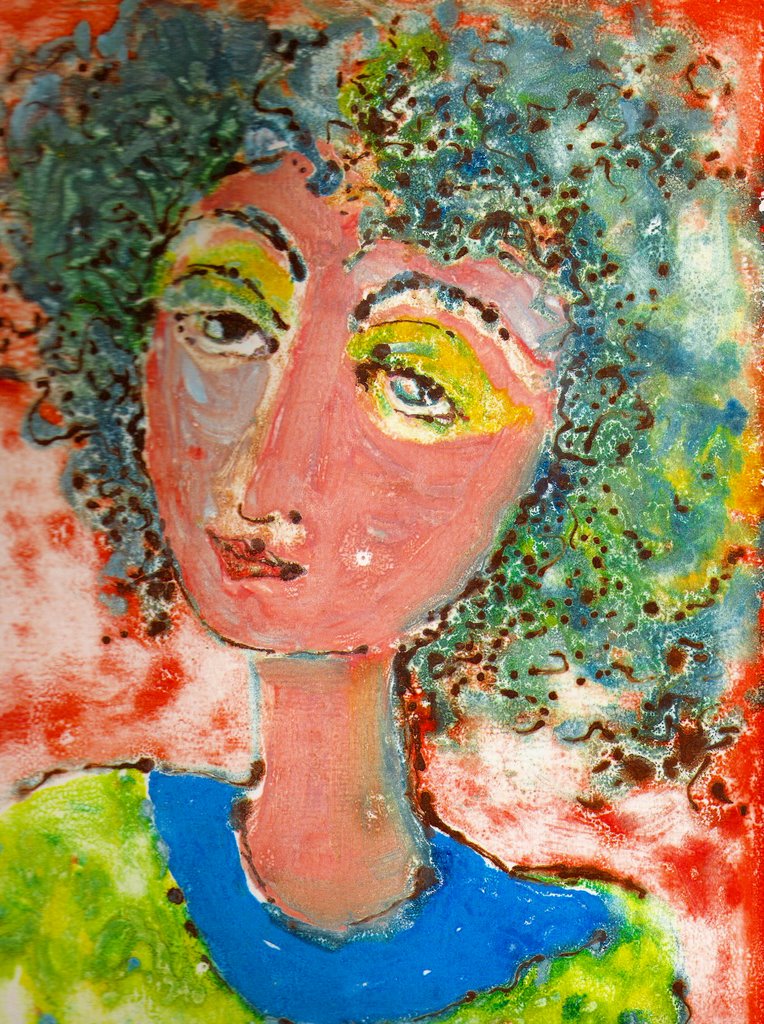
Image: "Daughter" Original monotype (c) 2006 Deborah Fries